Site icon Earn Up to $5K Commissions Per Sale

How the USA and France Tried to Kill Ibrahim Traoré? A Geopolitical Perspective

ibrahim traore

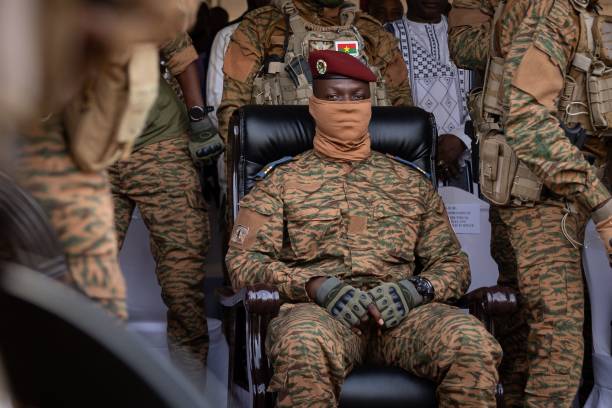
TOPSHOT - Capitaine Ibrahim Traore, Burkina Faso's new president, attends the ceremony for the 35th anniversary of Thomas Sankaras assassination, in Ouagadougou, on October 15, 2022. - Captain Ibrahim Traore, who took power a fortnight ago in a coup in Burkina Faso, attended a ceremony on October 15, 2022 to mark the 35th anniversary of the assassination of revolutionary president Thomas Sankara, an AFP reporter noted. (Photo by OLYMPIA DE MAISMONT / AFP) (Photo by OLYMPIA DE MAISMONT/AFP via Getty Images)

How the USA and France Tried to Undermine Ibrahim Traoré?

  • In recent years, the African Sahel has become a critical stage for both regional instability and international power struggles. At the center of Burkina Faso’s political transformation stands Captain Ibrahim Traoré, a young military officer who rose to power in a 2022 coup, promising to restore sovereignty and fight terrorism. His rise has unsettled not just local elites, but also powerful foreign interests — particularly those of France and the United States.

The End of France’s Grip

  • For decades, France has maintained deep political and economic ties with its former colonies, often through military interventions and complex financial arrangements like the CFA franc. However, Traoré’s rhetoric and actions have directly challenged this neocolonial legacy. By expelling French troops and turning away from traditional Western partnerships, Burkina Faso signaled a break from the Françafrique system.
  •  
  • These moves drew international attention. France, already facing anti-French sentiment across the Sahel — notably in Mali and Niger — found its strategic and economic interests threatened. Traoré’s alignment with more pan-African and anti-imperialist sentiments created a rallying point for regional resistance to foreign control, making him a target for destabilization.

The U.S. Angle: Security or Strategy?

  • The United States, while less historically entangled than France, has significant counterterrorism operations in West Africa. Through AFRICOM and various security partnerships, the U.S. has invested in intelligence, drone bases, and regional alliances to combat jihadist insurgencies. However, many African leaders and analysts argue that these missions often mask deeper geopolitical interests — such as access to natural resources or military positioning against rivals like China and Russia.
  •  
  • Traoré’s reported openness to new partnerships, including with Russia’s Wagner Group, may have alarmed U.S. strategists. Any move away from Western-backed counterterrorism strategies toward alternative alliances threatens to reshape the power dynamics in the region — and potentially reduce American influence.

Alleged Assassination Attempts and Disinformation

  • Rumors have circulated about attempts on Traoré’s life, with fingers pointed at foreign-backed actors. While direct evidence of U.S. or French involvement remains unconfirmed, the environment of coups, foreign intelligence, and proxy wars in Africa makes such allegations plausible to many Burkinabè citizens.
  •  
  • There is also the question of media narratives. Western outlets often portray Traoré as part of a wave of “unconstitutional military rulers,” while local supporters see him as a patriot resisting foreign domination. The disconnect in these perspectives contributes to speculation that powerful nations are not only targeting Traoré militarily but also trying to discredit him internationally.

A Symbol of African Sovereignty

  • Whether or not direct plots by the U.S. or France exist, what is clear is that Ibrahim Traoré represents a major shift in West African politics — one that threatens established power structures. His leadership challenges long-standing foreign influence and offers a symbol of African agency in a global order still marked by neocolonial practices
  •  
  • The battle for Burkina Faso’s future may not just be a local or regional affair. It reflects a broader struggle over who gets to decide the fate of African nations: their people, or foreign powers acting in their own interests.
  • All Posts
  • Health
  • Life
  • Money
  • Religion
Load More

End of Content.

Exit mobile version