


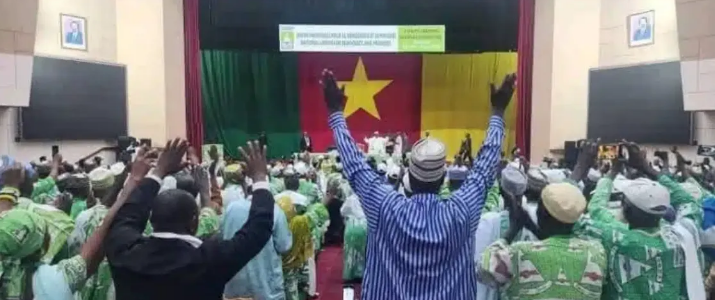
Cameroon’s political scene is once again stirred by internal tensions, this time within the National Union for Democracy and Progress (UNDP). Several militants of the party have publicly called for the resignation of Nana Aboubakar Djalloh, a prominent figure serving in the government, accusing him of betraying the party’s ideals and aligning too closely with the ruling establishment.
The Source of Discontent
The UNDP, historically known as one of Cameroon’s key opposition parties, has struggled in recent years to maintain its identity and influence. Many grassroots members feel that the party’s leadership has compromised too much by cooperating with President Paul Biya’s government. For critics, Nana Aboubakar Djalloh symbolizes this compromise.
Militants argue that his continued participation in the government undermines the party’s credibility as an opposition force. By serving in ministerial positions and supporting government policies, they claim, Djalloh has blurred the line between opposition and power, leaving many supporters disillusioned.
Calls for Resignation
The demand for Djalloh’s resignation is not just a matter of principle — it reflects deep frustrations among party members who believe that the UNDP has lost its voice. They argue that stepping away from government would restore the party’s independence and allow it to reconnect with citizens who seek a genuine alternative to the ruling party.
One activist stated: “We joined the UNDP to challenge the status quo, not to become part of it. Our leadership must choose: stand with the people or stay in government offices.”
A Party at a Crossroads
The crisis comes at a critical moment, with the 2025 presidential election on the horizon. Opposition parties across Cameroon are under pressure to unite if they hope to challenge the dominance of the Cameroon People’s Democratic Movement (CPDM). For the UNDP, internal divisions weaken its ability to play a meaningful role in this coalition-building process.
Analysts suggest that the tension reflects a broader identity crisis within the party. While some leaders argue for pragmatic cooperation with the government, militants demand a return to the party’s opposition roots. The outcome of this struggle could determine whether the UNDP remains relevant in Cameroonian politics.
Government and Party Response
So far, neither Nana Aboubakar Djalloh nor the UNDP leadership has issued a formal response to the calls for resignation. Within government circles, however, there is little sign that Djalloh intends to step down. Observers believe that the leadership may attempt to calm tensions internally, but the discontent among militants suggests that reconciliation will not be easy.
Conclusion
The calls for the resignation of Nana Aboubakar Djalloh highlight the deep divisions within the UNDP and the challenges facing Cameroon’s opposition parties. As the country prepares for the 2025 presidential election, questions of identity, independence, and credibility are becoming increasingly urgent. Whether the UNDP chooses to remain tied to the ruling establishment or reassert itself as a true opposition party will shape not only its future but also the broader political landscape of Cameroon.