


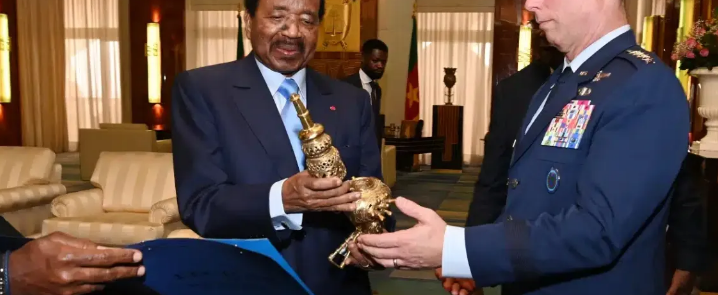
Cameroon’s President Paul Biya met with U.S. General Dagvin Anderson, Commander of AFRICOM, to discuss military cooperation, regional security, and the fight against terrorism.
A High-Level Meeting in Yaoundé
Cameroon’s Head of State, President Paul Biya, welcomed General Dagvin Anderson, Commander of the United States Africa Command (AFRICOM), at the Unity Palace in Yaoundé. The visit highlighted the importance of security cooperation between Cameroon and the United States, particularly at a time when regional challenges continue to grow.
The meeting served as a platform to strengthen bilateral ties and explore strategies for combating terrorism, maritime insecurity, and other cross-border threats in Central and West Africa.
AFRICOM’s Role in Africa
AFRICOM, headquartered in Stuttgart, Germany, oversees U.S. military operations and partnerships across the African continent. Its mission is to enhance security, build defense capacity, and support African nations in maintaining stability.
General Anderson’s presence in Cameroon reflects Washington’s recognition of the country’s strategic role in regional security, especially given its position at the crossroads of Central and West Africa.
Cameroon’s Security Challenges
Cameroon faces several pressing security issues that make cooperation with international partners vital:
- Boko Haram and ISIS-West Africa insurgencies in the Far North region.
- Maritime piracy in the Gulf of Guinea, a key route for international trade.
- Internal tensions in certain regions affecting peace and stability.
The United States has been assisting Cameroon through training programs, intelligence sharing, and the provision of modern equipment, particularly in counterterrorism operations.
Strengthening Military Partnership
Discussions between President Biya and General Anderson focused on:
- Enhancing the capacity of Cameroon’s defense forces.
- Expanding collaboration in intelligence and surveillance.
- Improving maritime security in the Gulf of Guinea.
- Intensifying the joint fight against terrorism and transnational crime.
This meeting underscored the shared interest of both nations in promoting peace, stability, and regional security.
Beyond Military Cooperation
The visit also carried diplomatic weight. By receiving AFRICOM’s commander, President Paul Biya reinforced Cameroon’s status as a reliable partner for the United States in Africa. For Washington, it was an opportunity to reaffirm its commitment to working with African allies to address growing instability on the continent.
This engagement is not just about defense—it is also about building stronger political ties and ensuring that Cameroon remains a key actor in shaping the region’s future.
Conclusion
The meeting between President Paul Biya and General Dagvin Anderson reflects the growing strategic importance of Cameroon in Africa’s security landscape. As threats from terrorism and piracy persist, the partnership between Yaoundé and Washington is expected to play a decisive role in safeguarding regional stability and protecting civilian populations.
By deepening military and diplomatic cooperation, Cameroon and the United States are laying the foundation for a more secure future in Central and West Africa.