




August 10, 2026
11:01 am

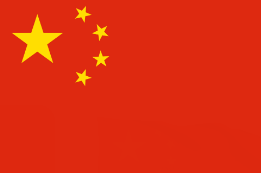
Global politics are heating up as China firmly pushed back against former U.S. President Donald Trump’s recent remarks about Venezuela, sparking renewed tensions between two of the world’s most powerful nations.
At a campaign-style event, Trump declared that “Venezuela’s days of dictatorship are numbered”, accusing China of shielding Nicolás Maduro’s government. He suggested that U.S. support for Venezuelan opposition forces may increase, raising concerns about foreign intervention in Latin America.
The comments mark a return to Trump’s hardline stance on Venezuela, a country he frequently criticized during his presidency, often linking its crisis to broader U.S. national security interests.
In response, the Chinese Foreign Ministry condemned Trump’s remarks, warning that any attempt to destabilize Caracas would “seriously undermine regional peace.” Officials stressed that Venezuela is a strategic partner for China, with billions invested in its oil and infrastructure sectors.
“External interference in Venezuela will not be tolerated,” the ministry said, emphasizing Beijing’s commitment to defending its allies.
Chinese state media further accused Trump of reviving “Cold War thinking” and warned Washington against reigniting tensions in the Western Hemisphere.
Venezuela’s significance lies not only in its vast oil reserves but also in its symbolic role in global geopolitics. For the U.S., challenging Maduro is about restoring democracy and regional stability. For China, however, defending Venezuela is about protecting economic investments and projecting power into the Americas.
This clash of interests positions Venezuela as a potential flashpoint in the broader rivalry between Washington and Beijing.
Latin American nations are divided. Colombia and Brazil have called for a diplomatic solution, while Mexico and Argentina urged the U.S. and China to avoid confrontation. Meanwhile, Caribbean states reliant on Venezuelan oil warned that escalating tensions could threaten regional energy security.
International observers fear that the crisis could spiral into a new front of great-power competition, especially if military posturing increases.
Analysts believe Trump’s rhetoric is aimed at energizing his political base, but the consequences could be far-reaching. Should the U.S. pursue a more aggressive policy toward Venezuela, China is likely to retaliate diplomatically and economically, deepening divisions in the global order.
With both nations unwilling to back down, Venezuela may once again find itself caught in the middle of a superpower struggle that extends far beyond its borders.
As tensions rise, Venezuela’s crisis underscores how regional conflicts can quickly become global battlegrounds. Trump’s fiery remarks and China’s strong response have placed Caracas at the heart of U.S.–China rivalry, with oil, democracy, and international influence all hanging in the balance.
Today Many people are faced with spiritual attacks. Discover seven spiritual signs that may indicate obstacles to your financial breakthrough...

Discover how smart people in Cameroon are using affiliate marketing with SuccessLife to build online income streams. Learn step-by-step strategies...

Affiliate marketing today in Cameroon and Africa in particular is on the rise, with many youths getting more and more...

Making money online today is very possible. Alot of people make money online today with Affiliate Marketing from home. You...

Earning money online today is very easy. You can earn $1000 online monthly. Learn how to make $1000 online as...
Learn how to scale your online business effectively. Discover proven strategies for increasing revenue, expanding your audience, automating processes, and...